
Columbia County Criminal History Checks
Choose the source by the question. The Columbia County Clerk’s Court Records search is the direct route to filed felony and misdemeanor cases. Select the person or case-number option, accept the terms, narrow the results when possible, and open the case header and docket. The online index usually receives the prior day’s entries by 7:00 a.m., although events and outages can delay publication. A new arrest may therefore exist at the detention facility before a court case appears.
- Use a booking or incident record when the immediate question is what happened at arrest.
- Use the Clerk docket to learn whether prosecutors filed charges and how the case ended.
- Use FDLE when a reported statewide Florida criminal-history response is needed.
- Use the Florida Department of Corrections for state prison or felony-supervision status.
- Use the FDLE registry for offender or predator information by name or neighborhood.
The Clerk’s home page is the county’s court gateway and separates Court Records from Official Records. View the Columbia Clerk gateway used for court access before choosing a database.
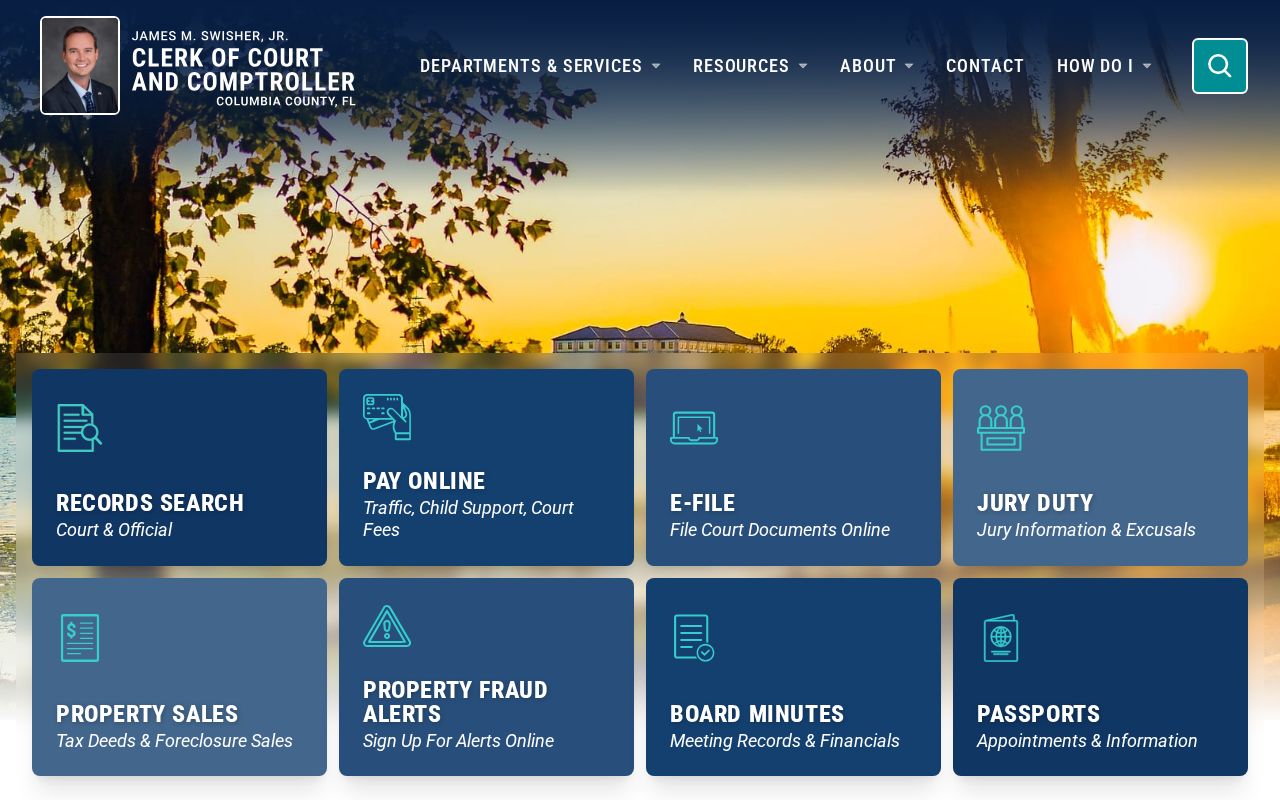
That distinction matters because Official Records contains deeds, liens, and recorded judgments; it is not the criminal docket.
Three Buildings, Three Record Roles
Columbia County’s main criminal-record counters are separate. The Clerk and courthouse are at 173 NE Hernando Avenue in Lake City. Columbia County Sheriff’s Office headquarters, which handles deputy reports and public-record requests, is at 4917 US Highway 90 East. The Columbia County Detention Facility is at 389 NW Quinten Street and answers current custody questions at 386-755-7000. Sending a request to county administration can add a handoff: the Board of County Commissioners expressly says it does not maintain Sheriff arrest records or body-camera footage.
The Clerk publishes its location and contact channels together. Confirm the Columbia Clerk’s current contact information before requesting a certified document.
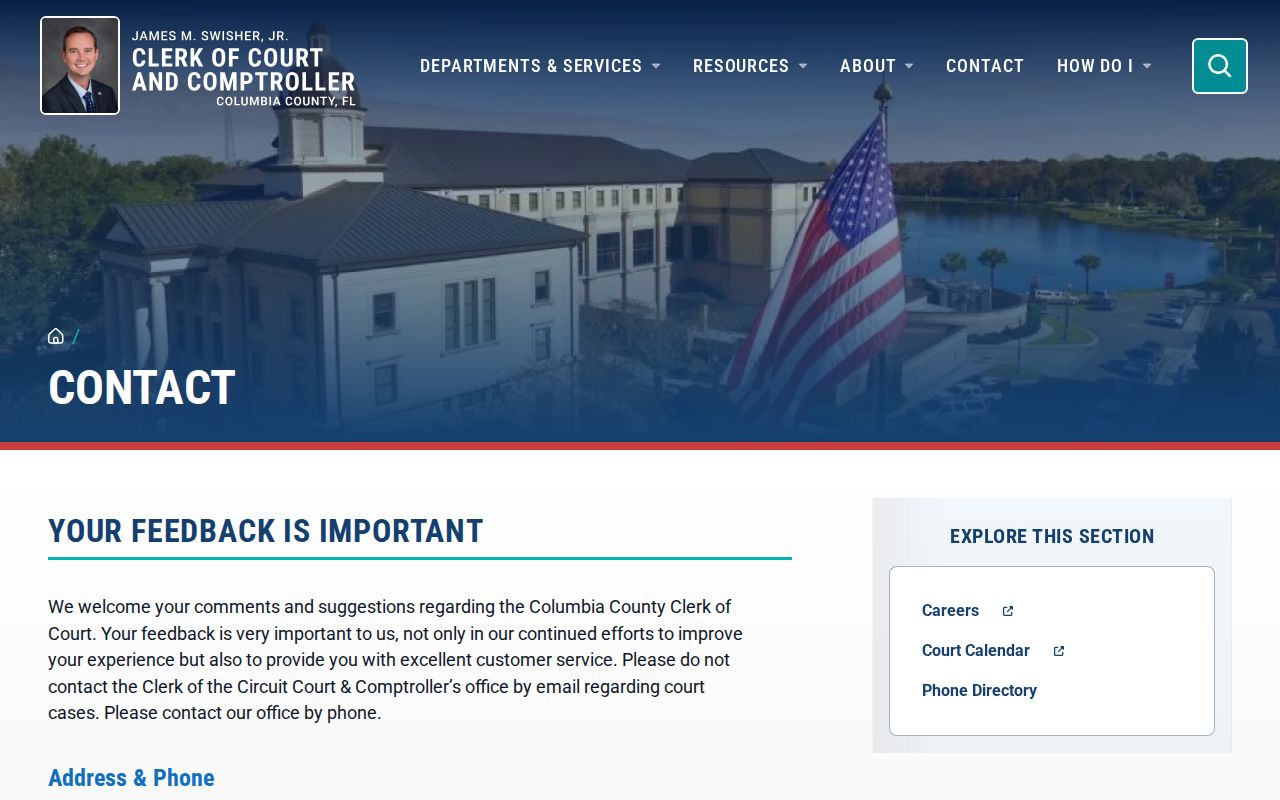
The image reinforces a practical rule: obtain a docket or certified court paper from the Clerk, a deputy-created report from Sheriff headquarters, and a custody or booking answer from the detention facility.
Official Background Checks in Florida
The Florida Department of Law Enforcement is the state repository agency. Its Florida Criminal History Record Check offers a public name-based search for $24. A result is a statewide FDLE response, not a certified Columbia County court file, and name matching can confuse people with similar identifiers. Searchers should verify a possible match against the Clerk’s disposition and the agency that created the underlying entry.
FDLE’s official page distinguishes the name-based options and their fee. Review the FDLE Florida-check choices before ordering.
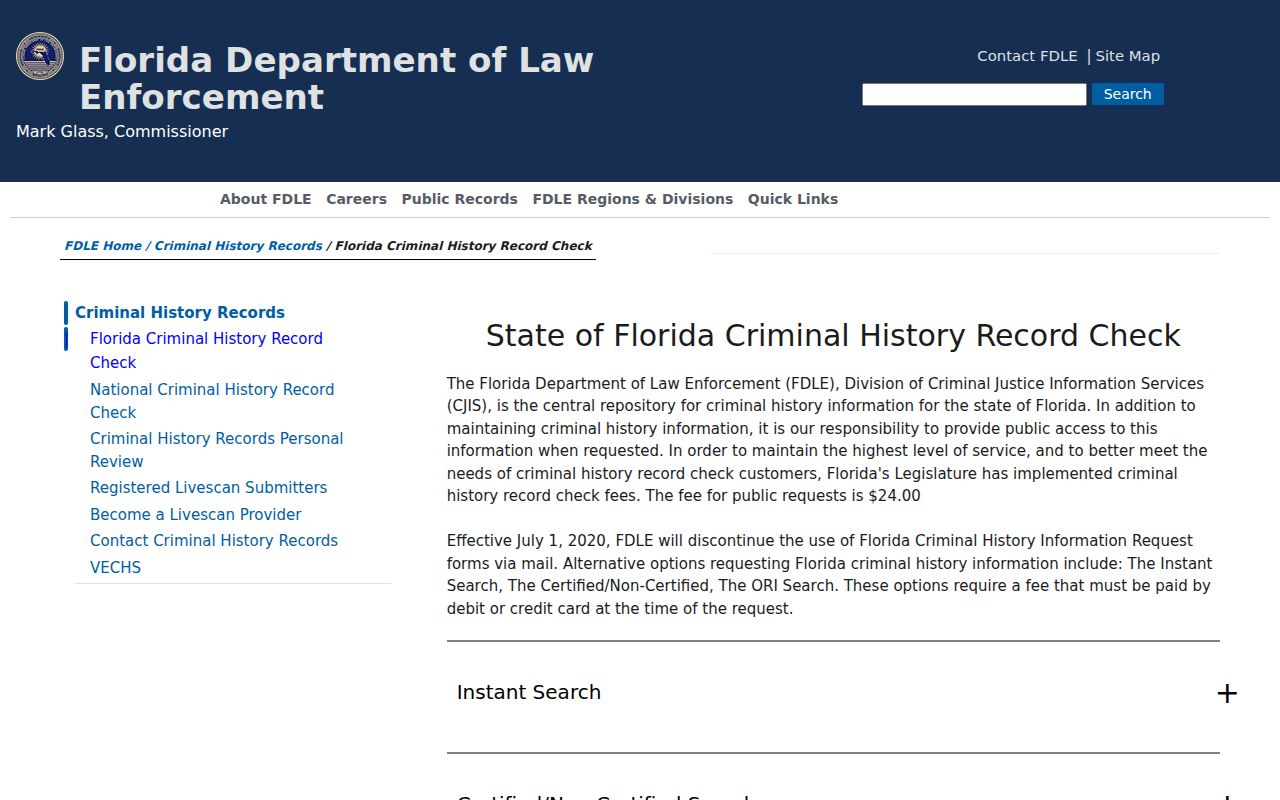
The paid state search serves a different purpose from the free local docket: it draws from the statewide repository, while the Clerk shows the filed Columbia case and its court events.
The public name-search screen shows the interface used to submit a Florida repository query. Open FDLE's criminal-history name check and read the current terms before entering search details.
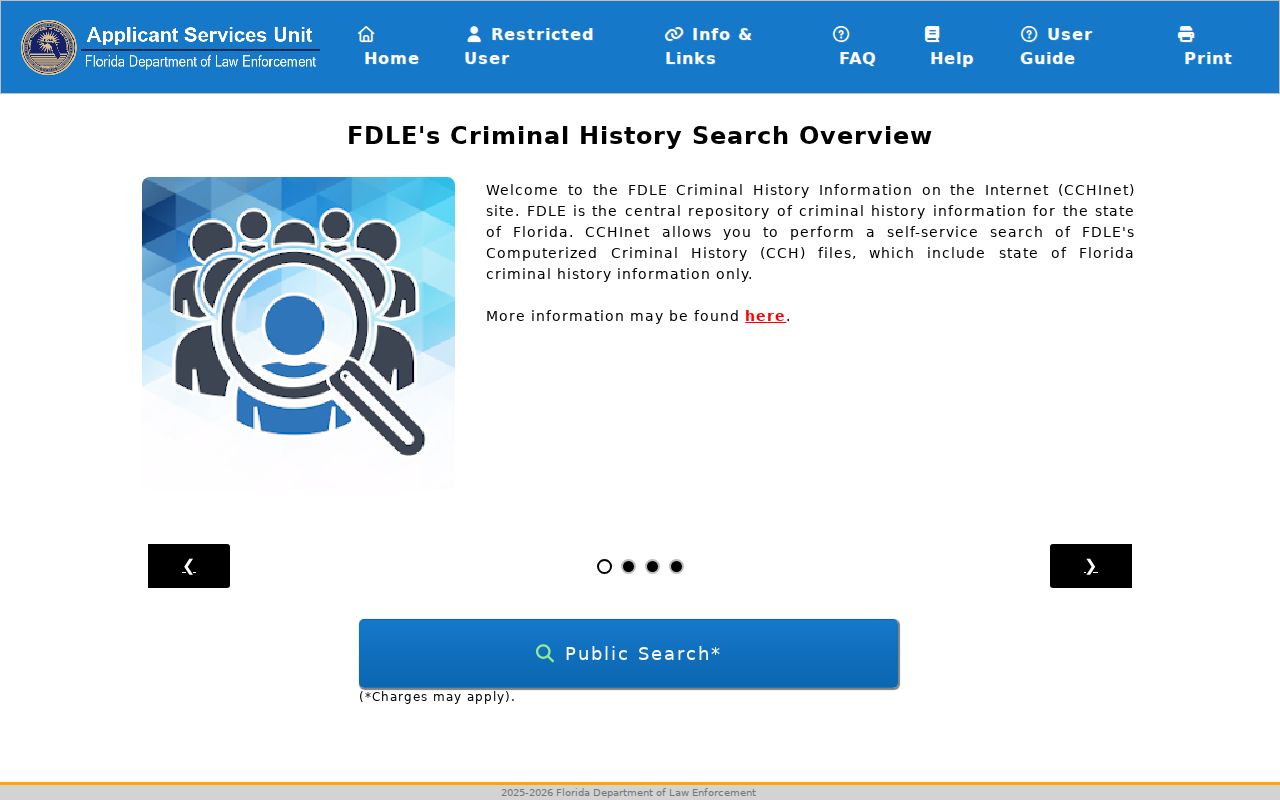
Use identifiers carefully and verify any candidate match; similar names do not establish that the returned cycle belongs to the person being researched.
A person reviewing their own Florida record can use FDLE’s fingerprint-based Personal Review process. The Florida Department of Law Enforcement Fingerprint Services channel supports identity-based review and a challenge when an FDLE entry is incomplete or inaccurate. This route is especially useful when a name-based response shows a case without a disposition or the record may belong to someone else.
Open FDLE’s Personal Review instructions to see the official fingerprint and submission pathway.
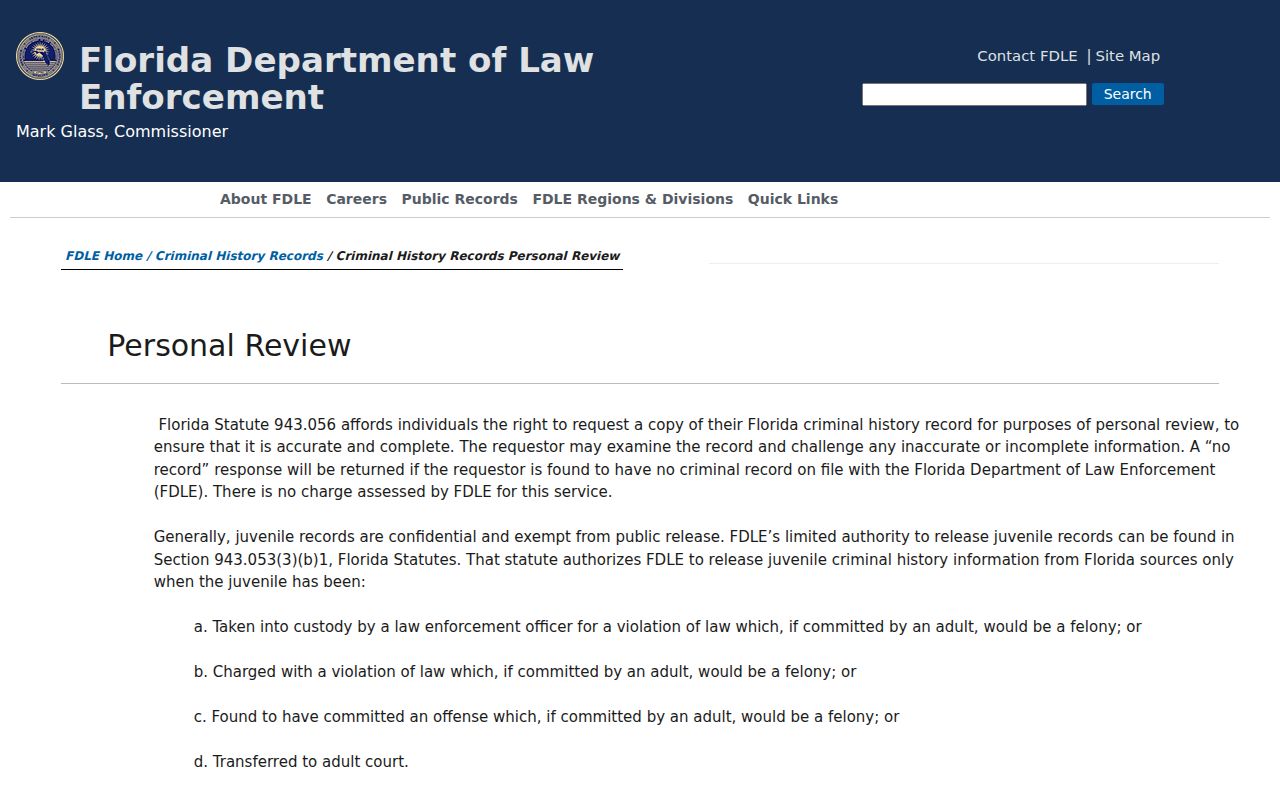
A fingerprint review confirms identity more reliably than a name-only match, but it does not replace a certified court disposition when FDLE asks for one to correct the cycle.
Three Records Often Mistaken for One
An arrest can create several trails. The arresting agency writes the incident or probable-cause material. The detention facility creates booking, bond, hold, release, and custody entries. If the State Attorney files a prosecution, the Clerk opens the court case. Fingerprints may also create an FDLE cycle. These records can use different numbers and update at different times, so a negative result in one system does not erase the others.
| Police or Sheriff report | Describes the event, agency, alleged probable cause, arrest location, and charges asserted at the time. |
|---|---|
| Booking record | Tracks intake, booking number, preliminary charges, bonds or holds, custody, transfer, and release when public. |
| Criminal case file | Shows filed counts, hearings, pleas, motions, judgment, disposition, sentence, costs, and public warrant entries. |
| FDLE history cycle | Connects reported arrest and disposition information in the statewide repository, subject to reporting and correction. |
Lake City Police records use records@lcflapd.com and 386-758-5432 or 386-758-5487. Sheriff-created records use records@columbiasheriff.org or 386-752-9212. Florida Highway Patrol reports remain with FHP or the official FLHSMV channel even when an arrested person is booked locally. Fort White has no separate police department; CCSO is the practical law-enforcement custodian there.
Kinds of Criminal Records
Each record type answers a narrower question and comes from the office that created it. Columbia County’s decentralized system makes the custodian more important than the search term.
- Arrest and booking records: CCSO, LCPD, FHP, or another arresting agency holds its report, while the detention facility holds intake and custody data.
- Criminal court files: the Columbia Clerk maintains Circuit Court felony and County Court misdemeanor dockets.
- Statewide history responses: FDLE compiles reported Florida cycles and operates the $24 public name search.
- Warrants: no verified public Columbia warrant portal was found; check CCSO, the Clerk docket, and the issuing court.
- Custody and supervision: the county jail covers local detention; FDC covers sentenced state prisoners and adult felony supervision.
- Registry listings: FDLE’s Sexual Offenders and Predators Search is the official Florida source; CCSO handles local registration functions.
County Jail or State Custody?
Call the Columbia County Detention Facility for a person believed to be in current local custody. Research did not locate a dependable official public roster, so the phone and records-request channels are the proper fallback. Booking information can include the booking number, intake time, arresting agency, preliminary charges, bonds, holds, and release reason when those fields are public. Medical, protective-custody, and security data should not be assumed available.
After transfer to state prison or felony supervision, use the Florida Department of Corrections Corrections Offender Network. Open the FDC Offender Search interface for the statewide custody or supervision route.
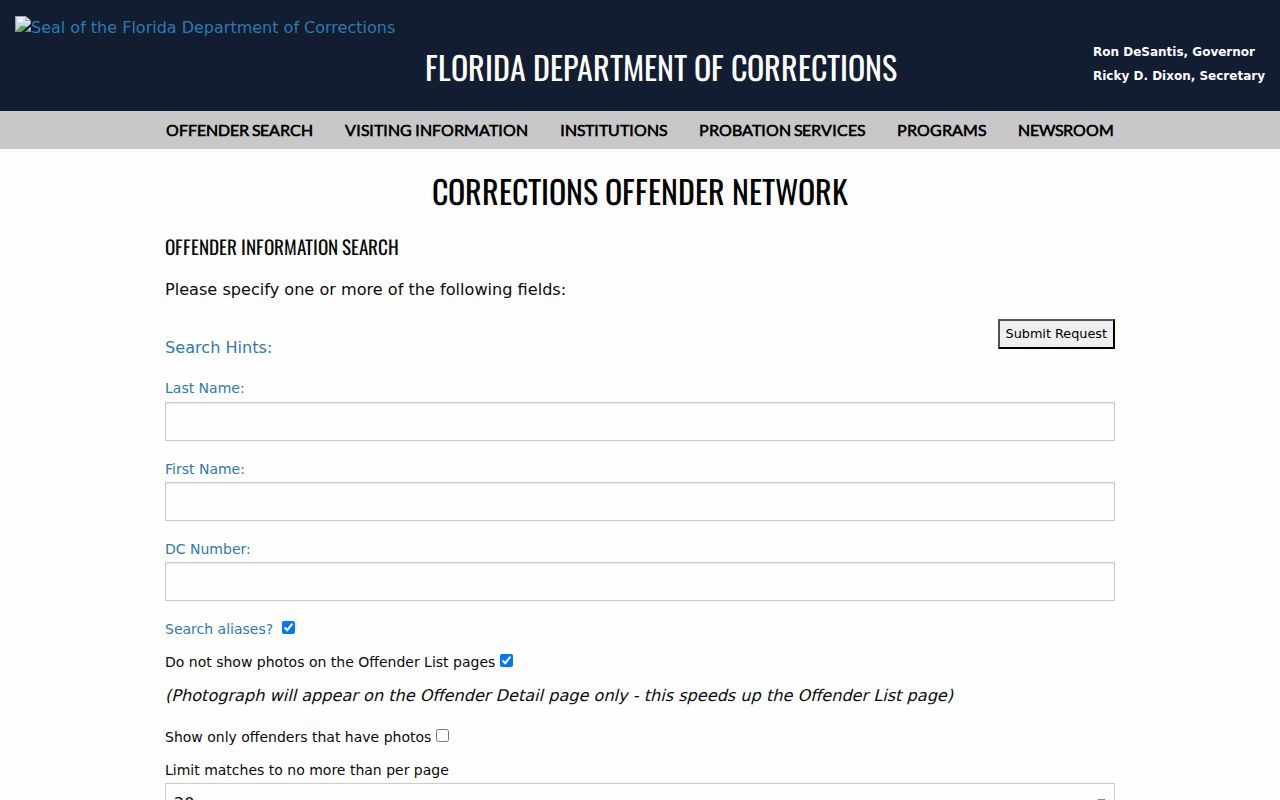
The FDC result can show public sentence, location, release, and supervision details, but it is not a substitute for the Clerk’s judgment or a same-day county jail status check.
Columbia County Criminal Records: What They Contain
A complete reading connects identifiers to the procedural outcome. A charge at booking is an allegation; the court disposition reveals whether a count was filed, dismissed, reduced, adjudicated, or otherwise resolved. Confirm names with available identifiers without republishing sensitive details.
| Name & identifiers | Public display name, aliases when released, date-of-birth information where permitted, and agency or case identifiers. |
|---|---|
| Arrest / booking data | Agency, date and location, booking number, initial charge, bond or hold, and custody or release entries. |
| Charges & statutes | Count, offense description, Florida statute, degree, and filing changes; booking labels remain preliminary. |
| Disposition | Plea, dismissal, acquittal, adjudication, or other result as entered by the court. |
| Sentence | Public incarceration, probation or community-control terms, fines, costs, and later modifications. |
| Custody / supervision | County detention, FDC prison placement, release information, or public felony-supervision status. |
Why a Same-Day Case May Be Missing
The Clerk’s search is not a live booking feed. Its disclaimer says prior-day entries generally appear by 7:00 a.m., with possible delays from special events or technical problems. Start with detention for current custody, request the booking sheet, and ask the arresting agency for its report. Check the Clerk again after filing time. If no docket appears, the absence does not prove there was no arrest or that prosecutors made a final filing decision.
This timing gap also explains why charges can differ. Officers record arrest allegations first. Prosecutors decide what to file, and the court later records the disposition. Treat the latest official source as answering only its part of that sequence.
Florida Public Access Laws
Article I, section 24 of the Florida Constitution and chapter 119, Florida Statutes, establish the public-access baseline for agency records. Section 119.07 governs inspection and copying, while section 119.071 contains general and law-enforcement exemptions. Court records follow Florida Rule of General Practice and Judicial Administration 2.420. Juvenile, victim, confidential-identifier, sealed, and protected investigative material may be withheld or redacted even when the surrounding file is public.
Key authorities:
Florida Statutes chapter 119 governs inspection duties and exemptions for public records.
Florida Statutes §943.053 provides FDLE criminal-history dissemination and fee authority.
Florida Rule 2.420 governs access to judicial branch records.
Restricted, Sealed & Expunged Records
A dismissal does not automatically erase a Sheriff report, booking record, Clerk docket, or FDLE cycle. Florida provides separate court-ordered sealing and expunction processes under sections 943.059 and 943.0585. The applicant generally begins with an FDLE certificate-of-eligibility process, supplying the required application, fingerprints, certified disposition, and fee, then petitions the court that handled the matter. Eligibility depends on the outcome, prior history, earlier relief, and offense exclusions; the certificate is not the final order.
Juvenile delinquency records are generally confidential under section 985.04, and sealed files disappear from ordinary public access. Authorized agencies may retain limited access after relief. Anyone correcting their own FDLE cycle should use the repository’s challenge or personal-review channel; anyone seeking a certified disposition should contact the Columbia Clerk’s criminal division. The Clerk’s Criminal Court navigation includes local Seal & Expunge Records instructions, but the research did not confirm the current local filing fee.
Florida See Say Is Not a Warrant Search
No verified public Columbia County active-warrant database was located in the official sources reviewed. The Sheriff promotes Florida See Say for suspicious-activity reporting, but that application is not advertised as a jail roster, criminal-record search, or warrant checker. A person checking their own possible warrant should contact CCSO at 386-752-9212, search the associated Clerk case, and confirm the status with the issuing court. Ask for the case number, warrant or capias type, bond information, and whether the court has recalled or resolved it.
An arrest warrant can arise from a criminal investigation, while a bench warrant or capias can follow a missed hearing or another court event. Public docket entries may show issuance or later action, but sealed warrants and juvenile matters will not appear. Database timing also matters: a recalled warrant can remain visible in an old screenshot or third-party cache. Never rely on a stale copy when current official confirmation affects whether or how someone appears. Legal advice can help a person plan a safe, orderly response to their own warrant.
Reading Florida Charges Without Assuming Guilt
Florida divides criminal charges by degree, but a degree label describes the statutory classification, not the final result. Circuit Court hears Columbia felony prosecutions; County Court hears misdemeanors. Under sections 775.082 and 775.083, a third-degree felony ordinarily carries up to five years of imprisonment and a $5,000 maximum fine, a second-degree felony up to fifteen years and $10,000, and a first-degree felony up to thirty years and $10,000. A first-degree misdemeanor ordinarily carries up to one year and $1,000, while a second-degree misdemeanor carries up to sixty days and $500.
Those are general ceilings, not a prediction of sentence. Capital and life felonies, offense-specific provisions, mandatory terms, and repeat-offender rules under section 775.084 can change the analysis. A booking sheet may abbreviate the offense or display the arresting charge before prosecutors review it. Read the filed information, count, statute, degree, disposition, and judgment together. If a charge was amended or dismissed, the docket chronology should show the change; the initial booking label alone does not establish a conviction.
For financial terms, compare the judgment with the Clerk's current balance display because assessed costs and unpaid balances answer different questions.
Correcting a Missing Columbia Disposition
When FDLE displays an arrest cycle without the expected outcome, first locate the Columbia Clerk case by name or case number. Compare the charge identifiers and arrest date to make sure the docket belongs to the same event. Then request a certified disposition from the Clerk if FDLE’s correction process requires it. The criminal division’s published lines are 386-758-1045 and 386-758-1338, with misdemeanor intake at 386-758-1048. Copy and certification fees should be confirmed with the Clerk because the reviewed research did not establish a current criminal-copy price.
A correction and record clearing are different procedures. A correction supplies accurate missing or mistaken information to the repository; sealing or expunction restricts access after a court grants statutory relief. Likewise, a dismissed charge can still remain visible as an accurate historical arrest and docket event unless a qualifying sealing or expunction order changes public access. Keep the certified disposition and any later order, and check each system separately because the Clerk, arresting agency, jail, and FDLE do not all update from the same database at the same moment.
City-by-City Criminal Records in Columbia County
Only Lake City and Fort White are incorporated, so two city guides match Columbia County’s actual municipal structure. Lake City Police creates city incident and arrest reports, while Fort White relies on CCSO. Neither municipality has a separate municipal criminal court portal; filed cases route to the Columbia County Clerk.
Lake City Record Check
Lake City Police records, county booking, Clerk dockets, and multi-agency I-10/I-75 routing.
Fort White Record Check
CCSO reports, county detention, Clerk cases, and the boundary between town and criminal records.